
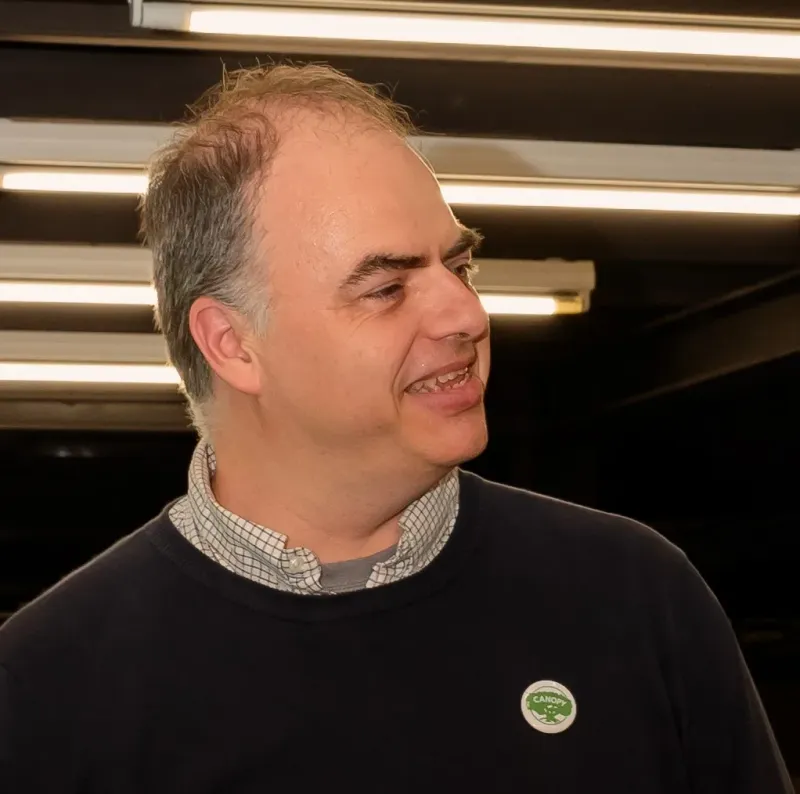
At the end of the summer, on a beautiful sunny day in Devon, I sat down with the amazing and long-trusted accountancy partner Sharon Austen.
Sharon and I have navigated many companies and transactions together over the years. So I was interested in her perspective on a question that is moving rapidly up the agenda for professional services firms: what happens to accountancy careers when AI starts doing the work through which accountants traditionally learned their profession?
The obvious conversation about AI in accountancy is about efficiency. Can AI prepare a first draft of a tax return? Can it interrogate data? Can agents undertake elements of audit testing? Can Copilot remove administrative work? Can meetings be transcribed and summarised automatically? Increasingly, the answer is yes.
But our conversation quickly moved beyond productivity. Because if we automate the bottom of the accountancy career ladder, we have to ask what happens to the people who previously climbed it.
And perhaps an even more interesting question: do we need a completely different ladder?
The old accountancy apprenticeship worked
Accountancy has traditionally had a remarkably well-established development pathway. People joined firms from school or university and began towards the bottom of the organisational pyramid. Some of the work wasn't particularly glamorous.
Sharon recalled what she used to tell people joining the profession:
"You've worked incredibly hard to get here, and then in your first year there may be moments when you wonder why the work feels so routine."
But that routine work had a purpose. Junior accountants learned by doing. They processed information. They reconciled things. They checked things. They saw mistakes. They learned how transactions flowed through organisations. They became familiar with clients and gradually developed an understanding of what looked right — and what didn't.
Then they progressed. Eventually, they supervised someone doing broadly the same job they had once done themselves. Over years, technical knowledge became experience. Experience became judgement. And some of those people eventually became partners.
It was a ladder that generations of accountants understood. AI is starting to remove some of its lower rungs.
The work isn't disappearing evenly
One of Sharon's interesting observations was that across the accountancy industry, AI initially found some of its most obvious applications in the more "wordy" areas of professional life. Marketing. Presentations. People activities. Writing and polishing content. These were relatively natural extensions of how many people were already experimenting with generative AI outside work.
Now the technology is moving deeper into the technical work. Information held across different systems can be brought together to help produce a first draft of a tax return. Agents can be developed to undertake specific audit tests. Data that previously required significant manual interrogation can increasingly be analysed automatically.
That creates obvious productivity opportunities. It also removes precisely the type of repetitive work traditionally given to people at the beginning of their careers.
Sharon believes this could make entry-level accountancy more interesting, not less. I agree. But it creates a development problem we shouldn't underestimate.
How do you learn judgement without doing the work?
Imagine someone joining an accountancy firm in 2030. AI handles much of the basic data processing. It interrogates information, identifies anomalies, prepares first drafts and suggests possible explanations.
The young accountant can therefore become involved in higher-value work much earlier. Great. But where does their judgement come from?
A partner looking at a set of numbers today might immediately sense that something isn't right. That instinct wasn't downloaded. It was accumulated. It came from thousands of hours looking at accounts, talking to clients, finding mistakes, seeing unusual situations and understanding what happened next.
If AI removes thousands of hours of routine experience, firms need another mechanism for developing the judgement that resulted from it.
This may become one of the most important talent questions facing professional services: how do we accelerate experience without removing the learning that experience created?
Knowing the answer may no longer be enough
This led Sharon and me towards what I think is the bigger change.
For generations, professional careers have rewarded knowledge. You studied. You qualified. You accumulated specialist expertise. Clients came to you partly because you knew things they didn't.
AI fundamentally changes the economics of knowledge. A client can already sit at home and have a remarkably sophisticated conversation with an AI about their business, tax, financing or strategy. That doesn't mean the answer will always be right. It doesn't mean professional advice becomes unnecessary. But it does mean that access to knowledge is becoming radically easier.
Which leads to a distinction that I think will become increasingly important:
The traditional accountant has often been rewarded for knowing the answer. The AI-first accountant may increasingly be rewarded for knowing what question needs asking.
That is a very different professional skill. When knowledge becomes abundant, simply knowing something becomes less differentiating. Value shifts towards understanding the context, recognising what matters, exercising judgement and asking the question that changes the direction of the conversation.
And that may require a very different career ladder to develop it.
Three skills for the AI-first accountant
Our conversation kept returning to three human capabilities that may become increasingly important: judgement, relationships, and the ability to ask questions that bring about change.
Judgement
AI can produce an answer. The professional still needs to decide whether it should be trusted.
Sharon gave the example of organisations using AI transcription and summarisation to produce meeting minutes. The technology can create an excellent starting point. But when those minutes become part of a governance process, small ambiguities matter. Was a resignation actually agreed? Was an important risk discussed? Does the final document accurately reflect the emphasis of the meeting?
AI can generate the output. Someone still has to own it. For accountants, that ability to interrogate, validate and ultimately take responsibility for an answer may become more valuable rather than less.
Relationships
The second capability is human connection.
One of the arguments for AI in professional services is that automation releases professionals from administrative drudgery and gives them more time to spend with clients. That sounds compelling.
But Sharon introduced an uncomfortable counterpoint. Her husband had worked in banking when customers talked enthusiastically about valuing branches, personal relationships and being able to shake their banker's hand. Then cheaper online alternatives arrived. Customers discovered that they valued the relationship — but perhaps not enough to pay extra for it.
Accountancy firms should think carefully about that lesson. If an AI-first competitor can provide much of the same service faster and considerably cheaper, how much is the client genuinely prepared to pay for the human relationship?
Relationships matter. But firms may need to demonstrate their value rather than simply assume it.
Asking questions that bring about change
The third capability may be the most interesting.
Sharon described part of the future human role as identifying "the right question and the most useful question." That's bigger than prompt engineering.
A valuable accountant might increasingly be the person who looks beyond the information being presented and asks:
Why are we doing this?
What is this number really telling us?
What aren't we measuring?
Where is the risk nobody has noticed?
What happens if this assumption changes?
Is there a better way of operating?
What opportunity are we missing?
AI can help explore those questions at extraordinary speed. But somebody needs the curiosity, context and commercial understanding to ask them in the first place.
The accountant starts moving from processor to interpreter to challenger to catalyst for change. And perhaps that is one of the biggest clues as to what the new career ladder should look like.
So what should accountancy firms recruit for?
This is where the career ladder question becomes a boardroom question.
If tomorrow's successful accountant needs different capabilities, today's recruitment, training and promotion systems need to start reflecting them. Across the industry, that could mean reconsidering early-career recruitment and the attributes firms look for in the next generation of accountants. That process will surely accelerate.
Perhaps we should be asking less about whether a graduate can perform the traditional junior accountant role and more about whether they can become the kind of professional an AI-first firm will require.
Can they exercise critical thinking?
Can they challenge an answer?
Can they communicate complexity?
Can they build trust?
Can they understand a client's commercial context?
Can they identify the question nobody else has asked?
And crucially: how will we teach them those things?
Because there's another complication. The people responsible for training the next generation may never have done the job their trainees are now being asked to do. For decades, accountants trained people to follow broadly the path they themselves had travelled. That continuity is breaking.
Perhaps we need a different ladder
AI removing repetitive work from accountancy doesn't have to be a negative story. Removing drudgery could create richer careers. People could encounter clients earlier, exercise commercial thinking sooner and spend more of their careers doing work that genuinely requires human capability.
But we shouldn't assume that removing the old work automatically creates the new profession. It needs to be designed.
Accountancy leadership teams therefore need to look beyond the immediate AI question — what can we automate? — and start asking a more important one: if we automate this work, what skills disappear with it, what capabilities become more valuable, and how are we going to develop them?
Perhaps the bottom rung isn't disappearing. Perhaps we're discovering that climbing the old ladder is no longer the best way to learn the profession.
And perhaps the new ladder will be built around three things that become more valuable as knowledge itself becomes abundant: judgement, relationships, and the ability to ask the questions that bring about change.
That could produce a very different accountant. It could also produce a very different accountancy firm.
And the firms that start thinking about that now may have a considerable advantage in developing the partners they will need for an AI-first world.
This article reflects a conversation with Sharon Austen and her personal observations on the changing role of AI in accountancy. The views expressed are Sharon's personal views and do not necessarily represent those of her employer.
If you're leading an accountancy or professional services firm and would like to continue the conversation about AI, changing career paths and the skills needed by the next generation of accountants and partners, connect with Sharon Austen on LinkedIn.